Another year has come and gone and quite frankly I am
happy to see 2018 go. I spent the first half of the year wrapping up my cancer
treatments and the latter half dealing with the emotional aftermath. If you
ever end up knowing someone who goes through the big C or have to go through it
yourself, prepare for the fact that the post-treatment is often worse than the
actual treatment. My doctors warned me and I didn’t believe them until I began
to live it.
That being such, I didn’t go to see that many movies this year. I missed a lot of big (and not so big)
releases. In fact, most of last year’s
Oscar contenders are still on my to-watch-list, but I did see enough movies
that I feel like a list is still manageable. And fuck it, I want to write one,
so I will. In fact, what I did see
was actually rather interesting and this list is rather eclectic.
So, let’s lay some ground rules:
1. I am going after the American release date for the picks that have had premiers in that market. That means that many of last years Oscar favorites such as Three Billboards Outside of Ebbing, Missouri, Wind River or The Shape of Water aren’t eligible for this year (and that last one wouldn’t be anywhere near this list either way), even though they came out in my market this year. If there isn’t an American release (or it was so limited I couldn’t find out what it was) I will go after country’s domestic release.
1. I am going after the American release date for the picks that have had premiers in that market. That means that many of last years Oscar favorites such as Three Billboards Outside of Ebbing, Missouri, Wind River or The Shape of Water aren’t eligible for this year (and that last one wouldn’t be anywhere near this list either way), even though they came out in my market this year. If there isn’t an American release (or it was so limited I couldn’t find out what it was) I will go after country’s domestic release.
2. Umm… Actually, I think there is only one rule and that
was number one.
Before we get to the Top Ten, some various other awards.
Let’s start with the dubious awards:
Most Disappointing Film:
Halloween (Dir. David Gordon Green, U.S.A., 106 mins.)
Wow… Just wow. I was excited for this ever since it was first announced. A new Halloween movie? Produced by John Carpenter? Written by Danny McBride? With Jamie Lee Curtis back? That sounded like a recipe for greatness!
Then the reviews came out and they varied from fair to truly great. I got even more excited.
Then I saw the film and suffered through it. And the
worst part? I can see what other people see in the movie. I really can. It pays
tribute to the franchise’s legacy well enough portrays Michael Myers as a
monster of high caliber, but something is missing and I attribute it to two
points.
Firstly, when I was 14, I was obsessed with the Halloween-franchise. I watched the first movie probably at least 50 times and the others dozens of times. Those movies are burned into my memory till the day I die. I can’t escape them. Hell, I don’t want to. But when I saw the new movie, it was clear that the whole movie was essentially a giant love letter to the films that came before it. That sounds great, but considering the fact that it is a reboot that ignores every single one of the sequels, picking up directly after the first one, it doesn’t even make sense that it dedicates so much time to paying homage to movies that the movie canonically claims aren’t worth acknowledging. And more obviously; if your whole movie is a giant tribute to other movies, it prevents you from creating your own identity and that’s exactly what happened with this movie. I sat there throughout every movie thinking about how “that’s just like that time in Halloween___ when he___,” and after the fifth one of those thoughts it stopped being fun.
Secondly, throughout the series, there has always been these moments where Michael Myers for one reason or another doesn’t kill a person he comes across. Be it someone he bumps into, a woman who’s knife he steals or just someone who’s window he lurks outside of, sees them and then continues. It added suspense to the proceedings. Michael doesn’t kill everything he sees. There is a logic here. It may not make sense to anyone but him, but there is a logic.
Here there is no such thing. After about 30 minutes it became clear that if 2018 Michael Myers sees you, he kills you. There are no exceptions. All right, there is one, but it is such an awful moment that it is a lose-lose scenario no matter how it goes and the only way it would have worked is by simply cutting it from the film.
I thought this would be a triumphant return of the series. Instead it made me re-evaluate the worst movies in the series before this. And that, ladies and gentlemen, is a true disappointment.
Firstly, when I was 14, I was obsessed with the Halloween-franchise. I watched the first movie probably at least 50 times and the others dozens of times. Those movies are burned into my memory till the day I die. I can’t escape them. Hell, I don’t want to. But when I saw the new movie, it was clear that the whole movie was essentially a giant love letter to the films that came before it. That sounds great, but considering the fact that it is a reboot that ignores every single one of the sequels, picking up directly after the first one, it doesn’t even make sense that it dedicates so much time to paying homage to movies that the movie canonically claims aren’t worth acknowledging. And more obviously; if your whole movie is a giant tribute to other movies, it prevents you from creating your own identity and that’s exactly what happened with this movie. I sat there throughout every movie thinking about how “that’s just like that time in Halloween___ when he___,” and after the fifth one of those thoughts it stopped being fun.
Secondly, throughout the series, there has always been these moments where Michael Myers for one reason or another doesn’t kill a person he comes across. Be it someone he bumps into, a woman who’s knife he steals or just someone who’s window he lurks outside of, sees them and then continues. It added suspense to the proceedings. Michael doesn’t kill everything he sees. There is a logic here. It may not make sense to anyone but him, but there is a logic.
Here there is no such thing. After about 30 minutes it became clear that if 2018 Michael Myers sees you, he kills you. There are no exceptions. All right, there is one, but it is such an awful moment that it is a lose-lose scenario no matter how it goes and the only way it would have worked is by simply cutting it from the film.
I thought this would be a triumphant return of the series. Instead it made me re-evaluate the worst movies in the series before this. And that, ladies and gentlemen, is a true disappointment.
BEST SURPRISE

Peter Rabbit
(Dir. Will Gluck, U.S.A., 95 mins.)
I grew up with the works of Beatrix Potter. I loved her
illustrations, the simple, yet relatable stories of her tales and to this day
have a week spot for the animated series it spawned. So, when the trailer for
the new Peter Rabbit movie was released,
I almost flew into a rage. The trailer was horrible.
It wasn’t funny, didn’t even remotely look like the original and seemed to actively
be trying to desecrate Potter’s creation. But when it came out, people I trust
said they enjoyed the film for what it was. So, I went to see it and… I really
liked it.
It’s not really a Peter Rabbit movie. It’s a traditional rom-com that just so happens to take place in the world of Beatrix Potter and has Peter Rabbit as a half of a Wile E. Coyote and Road Runner-esque whole and the Looney Tunes-like relationship between James Corden’s Peter Rabbit and Domhnall Gleeson’s Thomas McGregor is where the movie shines. Domhnall Gleeson is one of my favorite actors and this movie is a perfect example of why. His over-worked, nitpicky Thomas steals the show as he tries to restore a house in the woods while keeping all the wildlife out, whilst simultaneously trying to court the beautiful next-door neighbor, Bea (Rose Byrne).
It’s not really a Peter Rabbit movie. It’s a traditional rom-com that just so happens to take place in the world of Beatrix Potter and has Peter Rabbit as a half of a Wile E. Coyote and Road Runner-esque whole and the Looney Tunes-like relationship between James Corden’s Peter Rabbit and Domhnall Gleeson’s Thomas McGregor is where the movie shines. Domhnall Gleeson is one of my favorite actors and this movie is a perfect example of why. His over-worked, nitpicky Thomas steals the show as he tries to restore a house in the woods while keeping all the wildlife out, whilst simultaneously trying to court the beautiful next-door neighbor, Bea (Rose Byrne).
It doesn’t deserve a place on my list, but for somehow
taking Peter Rabbit and mixing him
with Home Alone and Notting Hill and making it work, it
deserves a mention as a damn good surprise.

Bumblebee (Dir.
Travis Knight, U.S.A., 114 mins.)
I’ve hated every single Transformers-movie besides the first one. I left the first Michael
Bay-helmed film thinking that if only they fixed the sophomoric and racist
humor and made some of the designs less busy, they had a pretty solid formula
going. Then Revenge of the Fallen came
out and I realized that all the things I disliked must have been what Michael
Bay liked about the movie, because now the whole movie was basically nothing
but racism, sexism and incoherent action with robots that were so bland and
over-designed they were basically impossible to distinguish from one another. The
three sequels beyond that didn’t do much to improve that, even though I still
maintain that Revenge of the Fallen is
the worst of the bunch.
So, when they announced that they were giving series star
Bumblebee is own spinoff, I gave a disgusted scoff. These people couldn’t give
us a decent mainline Transformers-movie
and now I was supposed to believe that they could handle spinoffs.
Well, once they announced that it would be set in the 80’s and Hailee Steinfeld would star I kind of just went “shit,” and accepted that I would have to at least give the movie a chance. I like both of those things enough for that. And… I really liked Bumblebee. Its robot designs are more in line with the 80’s cartoon, it never dips too far into the nostalgia-barrel and Hailee Steinfeld is a breath of fresh air so strong it makes me hope that Hasbro and Paramount take this chance of simply ignoring the main series and continuing forward with a new continuity that involves Hailee Steinfeld.
Well, once they announced that it would be set in the 80’s and Hailee Steinfeld would star I kind of just went “shit,” and accepted that I would have to at least give the movie a chance. I like both of those things enough for that. And… I really liked Bumblebee. Its robot designs are more in line with the 80’s cartoon, it never dips too far into the nostalgia-barrel and Hailee Steinfeld is a breath of fresh air so strong it makes me hope that Hasbro and Paramount take this chance of simply ignoring the main series and continuing forward with a new continuity that involves Hailee Steinfeld.
Because there is no way that would make this series go
anywhere but up.
Worst
Movie
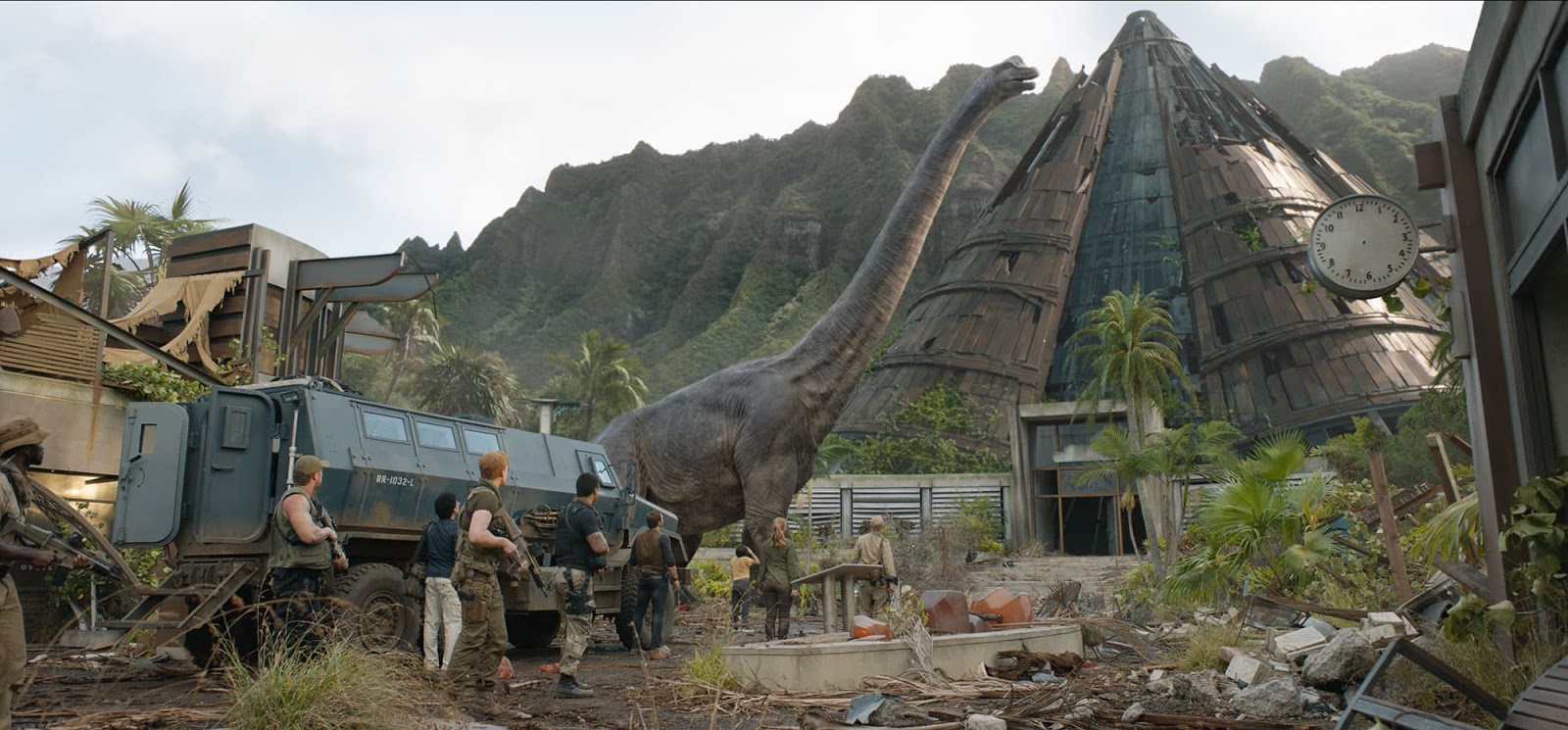
Jurassic World: Fallen Kingdom (J.A.
Bayona, U.S.A. 128 mins.)
*SPOILER
WARNING*
I
have to admit, I didn’t like Jurassic
World much at all. I tried to convince myself that it was as good as everyone
was saying and that truth be told, it probably is the best movie in the franchise besides the original. Too bad
that doesn’t mean much too much. The Lost
World: Jurassic Park is a boring overly long mess of a film filled with
unlikable characters that tries to redeem itself with an awesome final half
hour, but the slog to get there drags the whole film down too much to care. On
top of that, I hate the color the stock gives the forest in that film. The
first film is so lush and green, but The
Lost World: Jurassic Park is just… flat. It feels like they exchanged
Hawaii for the forests of Oregon.
Jurassic Park III is a 90-minute joke. A
joke I actually sort of appreciate, but still just a joke.
Jurassic World: Fallen Kingdom does not have me in on the joke. It is God
Awful.
It
takes Chris Pratt and Bryce Dallas Howard’s characters Owen and Claire and puts
them into a plot involving relocating and preserving the dinosaurs (a plot that
worked so well the last time you used it) and adds a ton of characters that
have no reason to be here except to
act as comic relief. BAD comic
relief. On top of that the movie’s villainous characters are so cartoonish in
their villainy that it stops being funny and just becomes frustrating.
When
Isla Nublar, the island of the Jurassic
Park and Jurassic World begins to
blow up, it leads into a giant cacophony of idiocy with dinosaurs who would never be interested in eating trying to
feed on our “heroes” and once the island succumbs to the lava swallowing it,
there is this sad moment where a Diplodocus is swallowed by ash and screams. I
cried in the theater. Not because the film had an effective moment, but because
I was so angry. I just thought “Colin Trevorrow, you are not even near a
good enough writer to have earned this moment. You don’t deserve to destroy an
island that has meant so much to me.”
And
that is the heart of the issue. This movie wants to, much like its predecessor,
live off the legacy of the series it is cribbed from whilst working toward the
next movie. The movie that Jurassic World
director and Fallen Kingdom-screenwriter
Colin Trevorrow has said is the movie he’s “always wanted to see”. Despite
setting up so many batshit and idiotic concepts the movie feels bizarrely like
it’s on auto-pilot most of the time. Existing as a justification for Trevorrow to
get the world in a place where he wants to see it be so he can tell a story he
really cares about.
If
his current work is any indication of his talent, then I am so glad that he got
fired from directing Star Wars for
Disney.
I’ll
end this with two final thoughts: firstly, the movie would have been more
interesting if they placed the relationship between Owen and Blue more center
stage, because the few scenes between them are the only ones that truly work
for me.
Secondly,
the one thing the movie improves is the character of Claire. It doesn’t really
make sense how she is basically an entirely different character now, with none
of the same mannerisms, style or anything, really, but the first movie seemed
so determined to make her unlikable the having her not be that is a definite improvement.
It
still doesn’t mean you should pay to see this trash, though.
MY TOP
TEN MOVIES OF THE YEAR
Honorable
Mentions:
Ready Player One (Dir. Steven Spielberg,
U.S.A. 140 mins.)
A movie that I surprisingly enjoyed enough to have seen it seven times as of writing this. Funny, fast and its pop culture references aren’t as annoying and hindering as those in the book it is based on.
A movie that I surprisingly enjoyed enough to have seen it seven times as of writing this. Funny, fast and its pop culture references aren’t as annoying and hindering as those in the book it is based on.
A Quiet Place (Dir. John Krasinski, U.S.A.
90 mins.)
John
Krasinski impresses with this horror/thriller set in a world where hyper
sensitive aliens have killed most of humanity and those left live in constant
silence. Tense as all hell, well-acted by Krasinski, his real-life wife Emily
Blunt and child actors Noah Jupe and Millicent Simmonds it makes for a great 90
minutes that has you on the edge of your seat, as you creep toward an incredibly
satisfying conclusion.
Isle of Dogs (Dir. Wes Anderson, U.S.A., Germany,
97 mins.)
We
Anderson’s second stop motion outing isn’t as good as the masterpiece that is Fantastic Mr. Fox, but it is still a
pretty great film about abandoned dogs on a Japanese island and the insane
adventure that they embark on. Had it not been for it feeling a little too
simplified a version of Japanese culture and history and for a certain
character being a little too white-savior-y, it might have made the list.
Ant-Man and the Wasp (Dir. Peyton Reed, U.S.A.,
118 mins.)
A
sequel on par with the original, we are reacquainted with Paul Rudd’s Scott
Lang as he is under house arrest for having aided Captain America in Captain America: Civil War. Soon,
however he is swept away by Evangeline Lily’s Hope Van Dyne and Michael Douglas’
Hank Pym and a new adventure starts. Just as funny as the first one, the
likeable cast and the addition of Evangeline Lily’s Wasp to the action gives
this movie a great pacing that I have found myself returning to several times.
If I were to rank these honorable mentions, this is definitely the one I would
put as number 11 on the actual list. I loved this movie and I am not ashamed
about that.
Aquaman (Dir. James Wan, U.S.A., 143 mins.)
It’s
like diet Black Panther. Which isn’t
a bad thing. Aquaman is charming,
pretty exciting film which I must admit maybe got a clear advantage from being
shown in 4DX Screen X here in Seoul, where I currently reside. Which meant that
whilst the movie was playing, wind and water effects whirled around me and my
seat shook like crazy and whenever something really awesome happened the movie
expanded out on the theater wall’s, immersing you entirely.
If
this movie holds up at home on Blu-ray remains to be seen, but for now I feel
comfortable saying that Aquaman belongs
with Wonder Woman as the DCEU movies
which are straight up enjoyable.
Border (Original Title: Gräns, Dir. Ali Abbas, Sweden, 108 mins.)
Based
on a short story by John Ajvide Lindqvist, the same author who wrote Let the Right One In, this story of a
troll working as a border agent is both dramatic, horrifying and beautiful.
Doing what Swedish cinema does so well, it shows the dull realism of life and
infuses it with a bit of Nordic folklore for a truly unique experience. It’s
the first Swedish film I have thoroughly enjoyed since… well, Let the Right One In to be honest.
And
now to the actual top ten list.

10. TWICELAND (Dir. Park Jin-young,
South Korea, 110 mins.)
I
honestly can’t believe that I am putting this on the list, but I can’t bring myself not to. My love of
K-pop has been a known quantity between me and my friends for half a decade
now, but I’ve always tried to sort of make peace with what I honestly felt I
was too old for by trying to view it from an ironic perspective. 2018 was the
year when I threw that stupid concept out of the window. I love K-pop (or at least certain groups in the genre) more
passionately than I do any Western acts in the current pop music climate and
that’s where Korea’s currently biggest girl group TWICE comes in.
Last
time I lived in Korea, three years ago, TWICE debuted with their single Ooh-Aah하게,
an inescapable earworm I only managed to escape through embracing and buying
their first mini-album. And ever since then I have picked up every single
Korean album they have released in one form or another. It sounds insane even
to me that TWICE has sort of become the soundtrack of my life, but it is true.
I remember vividly that in October 2016 they released their single TT and how I immediately got addicted to
listening to it. At the time, my grandfather was unbeknownst to us, dying from a
cancerous tumor in his intestines and on Halloween afternoon he had gotten
stuck at home and couldn’t get back to bed. I was forced to run over to my
grandparent’s house to help the only father I have ever known back to his bed.
I remember running there, TT blaring
in my headphones, me singing along, fighting back tears in the darkness.
It
was also the song I listened to when I walked up the hill to the hospital to
visit him the last time I would see him alive. Till this day, when I hear TT I think of him.
And
when I began working again after my own cancer bout their 2017 single Heartshaker was the song I would use to
get prepared to pretend that I was all right.
My
point is, my love for TWICE, or indeed any of the K-pop groups I follow is
ironic and the final straw of irony was immediately incinerated when I went to
see the 4DX Screen X experience TWICELAND.
It’s a concert movie which uses the gimmick format to the greatest effect I
have ever seen. Mostly because unlike Aquaman
or Bumbleebee which added effects
onto the sides of the theaters as a bonus for people paying for the format, TWICELAND was filmed fully intended to
be seen with the whole theater acting as the screen and the result is beautiful
to behold. The concert projects all around you, the nine members of the girl
group signing their biggest songs as the camera allows you to be immersed in
the concert and the various interactions the members have with the crowd.
Before
seeing TWICELAND I tried to only view
the members as pieces in a machine. They were cogs bringing me happy,
corporately manufactured pop music. But after having seen the movie I have
gained a profound respect for them as performers and the insanely hard work
that they clearly put into what they do. On top of that, when the concert comes
to an end and tears start to run down members’ faces, it is hard not to feel a
warm, fuzzy feeling inside.
And
the funny thing is, that feeling kind of hasn’t vanished for me. It’s still
there when I hear any of my favorite TWICE songs, which you do a lot here as you
walk down the streets. 2018 was a hard year for me, but one of the easiest
things I did all year was pulling off the irony-suit and fully admitting that I
love K-pop and that more importantly; I love TWICE.

9. Be with You (Original Title: 지금 만나러 갑니다, Dir.
Lee Jang-hoon, South Korea, 132 mins.)
A
remake of the 2004 Japanese film of the same name (or the book by Takuji
Ichikawa) Be with You tells the story
Woo-jin, a widower busy raising his son Ji-ho. Before passing away, Woo-jin’s
wife Soo-ah promised her husband and son that she would “return when the rain
season starts” and Ji-ho eagerly awaits when he’ll be able to see his mother again.
When
the rainy season starts, much to Woo-jin’s surprise, they find a woman who
looks just like Soo-ah in the woods, but she can’t remember either of them at
all. Despite this, she comes with them home and over the next couple of days begins
to care for the two deeply and that care reflects positively on the Woo-jin and
Ji-ho’s lives.
But
how is any of this possible and what will happen when the rainy season ends?
Will Soo-ah vanish once again?
The
story of Be with You captivated me
when I saw the Japanese version back in 2014. It was simple and slow-paced,
which allowed the quiet country atmosphere to envelop you fully and it is a
rare thing for a remake manage to recapture that kind of magic, but this slick
Korean production does really well at doing so.
So
Ji-sub is good as the stoic Woo-jin who struggles with being able to
communicate with and control his son while also dealing with his own health
issues. However, for me, the heart of the movie belongs to Son Ye-jin’s Soo-ah,
who has to play essentially two different characters as we see her a mother and
then as a blank slate, confused and slightly frightened by the claims her
would-be husband and son make about her life.
On
top of all of this, the movie shows flashbacks throughout, telling us the story
of how a teenage Woo-jin tries to win the heart of the girl he’s always loved
and how despite all the obstacles they somehow end up together.
Be with You is a simple but effective
romance movie that I thoroughly enjoyed. It’s calming, dreamlike atmosphere
makes it into a movie I know I will return to often and a movie I will
recommend to friends and family as often as opportunity allows. Consider
yourselves recommended.

8. Black Panther (Dir. Ryan Coogler, U.S.A.
143 mins.)
I
cried as the credits rolled on Black
Panther. Not only because it is certainly one of Marvel’s most engaging
films to date, but because unless you have reason to think about it, it is
still so rare to see movies with predominantly black actors that isn’t about race. Say what you want
about the fact that the society portrayed in the film still operating on
antiquated tribalism, it still is one of few movies where the entire main cast
is black and race isn’t driving the narrative.
But
that isn’t the only reason why I really loved Black Panther. It wraps itself up in an intrigue based in monarchical
conflicts and regicide that give the proceedings a Shakespearean flavor with
some really refreshing hip-hop-swagger infused with it. On top of that, the
film has really good characters portrayed by great actors and you almost have
to feel a little for Chadwick Boseman, who despite doing an excellent job
playing T’Challa gets overshadowed by a supporting cast that not only sees him
going up against Michael B. Jordan’s truly despicable Killmonger, but sees him
standing next to Letitia Wright’s Shuri, T’Challa’s genius little sister and
Danai Gurira’s Okoye as the head of the king’s guard.
I
don’t really feel like much more needs to be said about this one. It’s
well-acted, well-directed and shot coherently. It added some much-needed change
in setting and tone to the MCU and really proved that there is a future here
beyond the current cycle of characters and actors.
On
top of that, one of its action set-pieces is set in South Korea, which is
always a plus for me.

7. Mission Impossible: Fallout (Dir. Christopher
McQuarrie, U.S.A., 148 mins.)
It’s
almost inconceivable that the Mission
Impossible-series continues to impress as much as it does. The first was
good, the second bad, taking one of Asia’s most prolific action directors and clearly
only caring about having his name on the marquee rather than his actual strong
suits as a director and the third was a step up, beginning J.J. Abrams trend of
pulling struggling franchises out of the mud. But it was with the fourth,
directed by veteran animation director Brad Bird that the series found a new
voice and direction and truly took a step up in quality. Suddenly, this
relatively serious action series began to develop something special; a repour
between its audience and its characters. And when Christopher McQuarrie took
the director’s chair the fifth film in the series; Mission Impossible: Rogue Nation the pattern was cemented: these
movies, are the odd series that has the sequels getting better with very iteration
and the sixth entry, Mission Impossible:
Fallout is no exception. It is the best of the lot so far.
After
an arms deal goes wrong, Tom Cruise’s Ethan, Simon Pegg’s Benji and Ving Rhames’
Luther find themselves in front of the CIA’s gun barrel. Having to once again justify
the IMF’s existence as well as finding themselves tasked with finding three
stolen plutonium cores that could cause unthinkable devastation on the world should
they be utilized.
For
me, the main reason why the Mission
Impossible continues to engage me isn’t the well-crafted spy plots or Tom
Cruise’s willingness to do death-defying stunts. No, it’s the fact that unlike
any other action series that has lasted this long, the fact that the characters
are clearly so invested in each other’s survival is such an important detail. Mission Impossible: Fallout’s entire
story only plays out the way it does because Ethan Hunt refuses to sacrifice
one of his friends in order to secure a weapon of mass destruction. James Bond
for instance would make the difficult choice with little hardship, but that is
where this franchise differs. Ethan Hunt isn’t 007, he is a human being. A
Human being with connections, affection for his colleagues and fear of what lies.
When fear spreads across Ethan’s face it creates investment in the audience and
doesn’t let go of that investment until the credits roll.
Mission Impossible: Fallout is the
miraculous best in its series, taking characters we already love and setting
them up against new foes and obstacles. I don’t want to elaborate too much
about the plot of this well-directed and choreographed action-thriller, but
rest assured that if a seventh entry rears its head in a few years, I will be
there on day one. Because at this point, this is my favorite action franchise.
A mission I’ll choose to accept, every time.

6. Mirai (Original Title: Mirai no Mirai, Dir. Hosoda Mamoru, Japan, 98
mins.)
Hosoda
Mamoru is one of animation’s grat visionaries. Not just within animation, but through
all of animation as a whole. And with films such as The Girl Who Leapt Through Time, Summer Wars, Wolf Children and The Boy and the Beast under his belt, it should say something about the quality
of Mirai that only Wolf Children can compete with it.
Mirai tells the story of Kun, a toddler
who is suddenly has to share his parents’ and grandparents’ love and attention
when his parent’s come home from the hospital with his infant sister Mirai (the
Japanese word for future). Kun is angry, frustrated and sometimes even violent
as he tries to understand how this new world, no longer revolving around him functions.
Soon,
however, Kun begins to experience weird visions. He meets Mirai as a high
schooler, who berates him for how he treats her as a child and takes him on
adventures, a creature that claims to be the human embodiment of the family dog
and several other figures across the films’ running time, all of which help Kun
on his journey to grow out of toddler-hood.
And that is what Mirai
is really about. Developing into a more complex mind. If Pixar’s Inside Out was the embodiment of the human
mind beginning its journey into adulthood, Mirai
is its journey from toddler into proper childhood. Kun starts the movie entirely
unaware that a situation can exist where he isn’t the focus of every single
moment, only to receive a heavy slap across the face that makes him realize that
his world has forever changed, but through his meetings with these characters
(who can’t be simple figments of his imagination for several reasons) Kun
becomes a more independent, understanding and mature child.
Mirai is a
visually stunning, heart-warming experience that like many of the best animé
films out there is so well-crafted and relatable that it manages to make every
day moments emotionally impactful. Without saying too much, there is a moment
in the film where Kun is learning how to ride a bicycle that was, due to what
had come before along with the presentation, so powerful that it actually made
me teary-eyed and proud of a
character I had known for less than 90 minutes.
Hosoda Mamoru continues to impress and prove why he is
one of animation’s greatest living directors and deserves to be more well-known
than he is. Mirai is living proof of
why.

5. Shoplifters (Original Title: Manbiki Kazoku, Dir. Kore-eda Hirokazu,
Japan, 121 mins.)
I was studying film theory when Kore-eda Hirokazu fist
came to my attention. We had to watch his 1998 film After Life during one of the courses and I knew immediately that I
was a fan. In fact, when I took a course in Japanese Film History, I was
overjoyed to see it again. Most movies I had copies of at home or had seen
recently enough to remember the gist of, I would skip and sleep in on (this was
before I realized that life was basically movies and nothing else), but not
with After Life.
When I was studying acting a few years later, whilst concurrently
dipping into the Asian cinema-well for the first time I came across it again in
a box set bearing his name and started delving deeper into his filmography. To
this day Still Walking, his Ozu-esque
family drama is my favorite of the films of his I have seen, but Shoplifters, his 2018 film stands alongside
After Life on the number 2 spot.
Kore-eda has a very great ability to create films with
relatable characters, no matter if your own life experiences line up with their
own or not. This was true for After Life and
Still Walking and remains true with Shoplifters.
The movie revolves around a “family” of misfits who live
in poverty in a small house in Tokyo. The owner of the house, the elderly
Hatsue allows the married couple Osamu and Nobuyo, teenage runaway Aki and
pre-teen orphan Shota to live in her house because despite her limited pension,
she would rather be poor than lonely. To compensate for the lack of funds, the
family provides for itself through both low-paying jobs and through getting
their food via shoplifting, an activity they all excel at.
Things get more complicated however, when Osamu and Shota
find a little girl locked out of her apartment in the winter night. They bring
her home and one thing leads to another and soon she is inducted into the
family. It isn’t long before the police are looking for the child and the group’s
already complicated living situation begins to unravel.
Shoplifters is
a great introduction to Japanese dramas, but is an equally good choice for the
already experienced. Its cast, made up of some of Japan’s greats and the final
performance of Kirin Kiki as Hatsue make you forget that you’re just watching
actors and the smaller moments Kore-eda injects into his story makes for a
movie I can’t wait to see again, and to introduce to others I know would
appreciate. If you want something more realistic, then Shoplifters is a good bet. Hell, it’s a fantastic one.
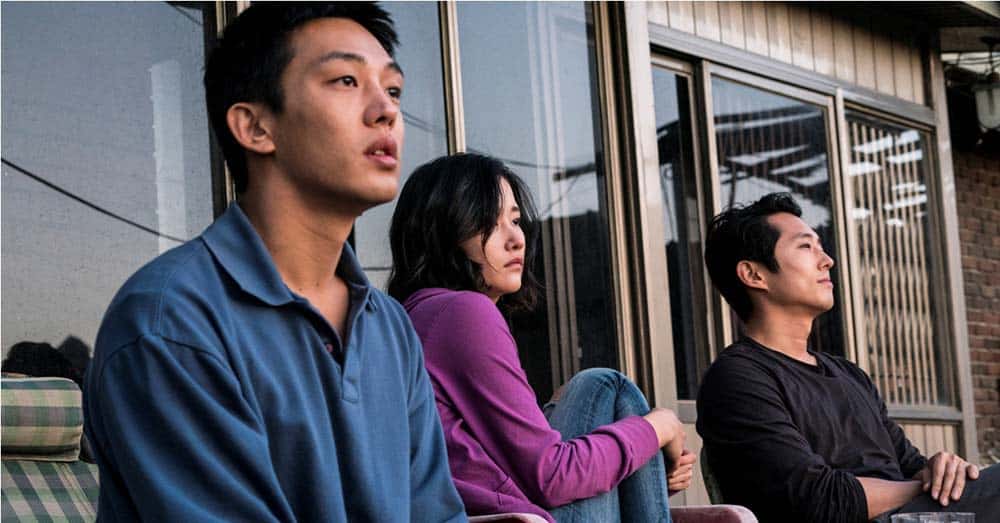
4. Burning (Original Title: 버닝,
Dir. Lee Chang-dong, South Korea, 148 mins.)
Lee
Chang-dong is one of South Korea’s most prolific directors. He’s also one I
actually don’t have that much experience with, to be honest. Because unlike his
peers Park Chan-wook (Old Boy, The Handmaiden), Kim Jee-won (A Tale of Two Sisters,
I Saw the Devil) and Bong Joon-ho (The Host, Okja) he specializes on more down-to-earth
stories that usually tackle incredibly heavy subject matters, such as rape,
murder, kidnapping and overall existential fatigue. The others tackle these
subjects too, but unlike Park Chan-wook, who for instance, with his film Sympathy for Mr. Vengeance made a movie
so bleak that every single second you watch it feels like a lump of led
settling in your stomach with a story that includes murder, torture, kidnapping
among other atrocities, Lee Chang-dong usually chooses to portray these things
as realistically as possible and it leads to some of his movies being very hard
to watch. Hard to watch in a way that differs from what I am accustomed to.
However,
when Burning was first announced, I
was incredibly excited for it for not only being a new movie from a major Korean
filmmaker, but because it hit the creative hat-trick. Not only was Lee
directing it, but it was based on a novella by famed Japanese author Murakami
Haruki and starred Yoo Ah-in, an actor I have come to really like over the
years. It also features The Walking Dead’s
Steven Yeun in his proper Korean movie debut. It also happens to be a more
twisted narrative than Lee usually engages with.
Jong-su
(Yoo Ah-in) is a 20-something from the country town of Paju, just south of the
Demilitarized Zone between North and South Korea. Due to some legal trouble, he
is left taking care of his family’s farm house, earning money from various odd
jobs. One day he meets an old classmate, Hae-mi (Jeon Jong-so) and it isn’t
long before feelings begin to develop between the two. Hae-mi leaves on a trip
to Africa she was set to go on before the two met, but when she comes back, she
has Ben (Steven Yeun) in to. A rich, charming Gangnam-man with everything
Jong-su doesn’t. Hae-mi leaves the lines blurred where her relationship with
either of the two men stands, but continues to rope a reluctant Jong-su to
spend time with not only her, but with Ben as well.
But
one day Hae-mi vanishes and Jong-su is left with no clue of where or why and no
matter who he seeks out or asks, no one seems to know where she is, nor do they
seem particularly bothered by her disappearance either. It is up to Jong-su to
try and find her, and to figure out if maybe Ben knows more about all of it
than he is letting on.
Burning is in a class of its own. It
might just seem like I told you the entirety of the plot of this movie, but in
all honesty, Burning lives off of its
moments and details. I saw this movie with a friend and it was one of those
movies that was worth it enough just for the talk the movie inspired in us afterwards.
The film doesn’t set its tone right away, so you could very much throw it on
for someone who knows nothing about it and let the story unravel. Burning’s story is like a rotten fruit,
from one angle you might almost assume it is edible, but when you peel away the
skin it turns out that there is something incredibly unpleasant underneath. In
some cases that is the opposite of an endorsement, but with Burning it is a definite recommendation.
It’s acting is fantastic from not just Yoo Ah-in and Steven Yeun, but also Jeon
Jong-so, who as far as I can tell is debuting in this film, the story is
subversive and unsettling in a way that has only seen the film grow on me over
time and the direction is tight as all hell.
Burning is a damn good time to be had and
a strong mark on the resumé of all the people involved with its production.

3. Spider-Man: Into the Spider-Verse (Dir.
Bob Persichetti, Peter Ramsey, Rodney Rotham, U.S.A., 117 mins.)
Spider-Man
has been my favorite superhero as long as I can remember. As a kid, newly
arrived in Sweden I would watch the Spider-Woman
cartoon, not because I cared particularly about Jessica Drew (even though
she was cool), but because there was that one episode of the show where Spider-MAN showed up!
That was when I was four. Before I knew Peter Parker. But as I grew older, and truly began to know what it was like to be alone, a bullied kid with an interest in science and books. After this evolution, Peter Parker became a vessel to put my frustration into. I read too many comics to count, bought as many toys from the animated series as I could and once the movies began coming out, I bought all of their tie-in games, soundtracks and saw the first trilogy three times each in the theater. I’m not telling you this to brag, I’m doing it to make a point. I love Spider-Man. I will probably always love Spider-Man. But as the years went on, I sort of fell off. I stopped reading the comics when his marriage to Mary Jane was undone, but I had basically stopped even before that, too. Choosing instead to focus on the already published classics. I still went to see the movies, but my enthusiasm began to wain even for these. In fact, I had basically switched to DC comics and had started idolizing Superman.
That was when I was four. Before I knew Peter Parker. But as I grew older, and truly began to know what it was like to be alone, a bullied kid with an interest in science and books. After this evolution, Peter Parker became a vessel to put my frustration into. I read too many comics to count, bought as many toys from the animated series as I could and once the movies began coming out, I bought all of their tie-in games, soundtracks and saw the first trilogy three times each in the theater. I’m not telling you this to brag, I’m doing it to make a point. I love Spider-Man. I will probably always love Spider-Man. But as the years went on, I sort of fell off. I stopped reading the comics when his marriage to Mary Jane was undone, but I had basically stopped even before that, too. Choosing instead to focus on the already published classics. I still went to see the movies, but my enthusiasm began to wain even for these. In fact, I had basically switched to DC comics and had started idolizing Superman.
Then
came Captain America: Civil War and
things began to look up. This Peter Parker was a good portrayal of the
character and his own movie Spider-Man:
Homecoming was certainly a step up from Sony’s previous reboot attempt.
However, ever since Amazing Spider-Man 2 failed,
people had been rumbling about maybe giving the newer Spider-Man from the
comics, Miles Morales a chance instead of Peter Parker again. All that came of
this was some rumbling from people at Sony about there being some plans for
him.
Fast
forward to 2018. Tom Holland’s Spider-Man takes part in the penultimate
Avengers-movie Avengers: Infinity War, we
get a truly excellent game from Ratchet and Clank-makers Insomniac Games and Miles
Morales finally gets his own movie in
the form of Spider-Man: Into the Spider-Verse,
an animated film from Sony Animation Studios and… it’s my favorite of all of
them.
Miles
Morales is a kid from Brooklyn who struggles to fit in at his new school, an
elite private school for the gifted. The pressures of his classes, fitting in
and overall just being a teenager begin taking their toll on Miles. Things don’t
get any easier when he finds himself bitten by a spider that ends up giving him
the same powers as Spider-Man.
When
a convoluted plot from The Kingpin results in a tear between universes, Miles
finds himself in the middle of a fight not just for our world, but all worlds
everywhere. And along for the ride are crew of other Spider-characters from
across the multiverse. The only problem is that Miles has been Spider-Man for
less than 24 hours, is he really ready to be a hero?
Spider-Man: Into the Spider-Verse managed
to do something I thought would never happen again; it made every single hair
on my body stand up, just like it did when Tobey McGuire first donned the suit
back in 2002. I attribute this mostly to the fact that by choosing to make this
movie an animated movie, it is given a more comic book-like feel, which along
with its remix of familiar characters and plots and quick humor both visual and
verbal make it so easy to get swept away by. It also has a terrific soundtrack,
which has been soundtracking my life for the last few weeks.
2018
will always be the year we lost Stan Lee. But I choose to see it as a beautiful
thing that he left us in what is the best year his most famous creation has
probably ever seen. The wait for Miles Morales was worth it. I just hope enough
people choose to give their money to see it so we get to see where this journey
can take us.

2. Paddington 2 (Dir. Paul King, United
Kingdom/France, 104 mins.)
This
is essentially the movie I chose to define my rule of “American release date”
for. I couldn’t not have Paddington 2 on my list. That’s how much
this movie resonated with me. The first movie took me and a lot of people by surprise
by just how sincere and heart-warming it was. It saw Paddington (voiced perfectly
by Ben Whishaw), the South American bear moving to London, only to find a place
far less welcoming than he first believed, but over the course of his adventure
his infectious kindness, curiosity and love of marmalade ended up getting him a
home and family in the form of the Browns. And that is essentially what Paddington was all about: a person so
loving and helpful that he turned everyone he came into contact with into
better people just by being himself.
And
Paddington 2 takes what the first
movie did so well and somehow manages to improve on it even further. Paddington
Bear is still living with the Brown family. Father Henry (Hugh Bonneville), mother
Mary (Sally Hawkins), children Judy (Madeleine Harris) and Jonathan (Samuel
Joslin) and housekeeper Mrs. Bird are all colorful personalities, who despite
their different quirks never lose sight of the fact of how much they love and
appreciate each other, or the newest member of their family.
Paddington
doesn’t crave much out of life besides marmalade, but when Paddington’s aunt
Lucy’s 100th birthday approaches, the bear finds himself in need of
a present. He settles on a pop-up-book of London, since aunt Lucy never got to
visit the city herself. However, it isn’t long before the book is stolen and
Paddington finds himself as the primary suspect.
Paddington 2 amps up everything that
made the first movie so damn loveable. It’s laugh-out-loud-funny, emotionally
impactful when it needs to be (there is a moment toward the end that makes me
cry without fail every time I see it) and the whole movie is so sincere that I
can’t even imagine what kind of person you have to be to not get swept up in
it.
Much
like Mission Impossible: Fallout (Gee,
I wonder how many people have compared these two movies) the heart of the movie
lies in the love the characters share with each other. In the first movie, Mr.
Brown was the one who fought loving Paddington for the longest time and it is
such a genuine joy to see him here, still the stiff, British office worker he
was last time, but whenever something goes wrong or there is reason to be
concerned for Paddington, he is always the one to react the most extremely. As
if the idea of anything bad happening to Paddington being the worst possible thing
in the world.
On
top of the old cast, the film sees an amazing upgrade in the form of Hugh Grant
as the flamboyant, self-obsessed actor Phoenix Buchanan, who wants the book for
his own nefarious reasons.
Paddington 2 is one of the best sequels
of all time and one of the best family films of all time as well. If you have a
beating heart behind your ribs you owe it to yourself to go on this adventure,
because in a world as rough as this one, it might just give you a little more
hope.

1. One Cut of the Dead (Original Title:
Kamera o Tomeru na!, Dir: Ueda Shinichiro, Japan, 97 mins.)
Where
in the hell did this… thing come from? I honestly don’t even really know how to
describe One Cut of the Dead. Because
this really is a case where I feel that knowing as little as possible about it
is the best way to enjoy it. So, what can I tell you?
Well,
it’s a Japanese independent movie with a super low budget. It was filmed in
only 8 days and has currently made over 1000 times its budget back after its
reputation has spread and has made people go check it out.
The
film starts with a 37-minute-long single take (yes, really) as a zombie
invasion grabs hold of a movie set on the Japanese countryside. It’s rough,
cheap and clichéd, but the fact that it actually works is impressive as all
hell. What happens after that? I won’t tell you. Not a word. Because you need to see it for yourself.
The
same friend that I saw Burning with saw
this at a different screening than me, but I remember meeting him the day after
at another movie and sort of trying to lead in to telling him that I saw a
movie that was so good it had me wondering if I had somehow lost my mind. But
when I told him the title, his eyes lit up and he pointed at me energetically
and said “I SAW IT, TOO!”
It
was confirmation that I wasn’t crazy. Or maybe I am, but in that case, I don’t
want to be sane. Because my movie of 2018 is a minimal budget Japanese zombie
movie (and I can’t emphasize enough that this description doesn’t do the movie
justice) called One Cut of the Dead of
all things.
It
embodied not just everything I love about film, but what I love about
filmmaking. And I think that if you see it, you’ll understand why.


